
Methods & requirements
IEC 60068-2-1: Cold Testing for Electronic Components and Equipment
Overview of IEC 60068 and IEC 60068-2
IEC 60068 establishes international procedures for environmental testing of electronic equipment, components, and assemblies – from aerospace systems to consumer electronics – which means manufacturers gain a single, globally recognized framework for validating product durability across borders.
Environmental testing part 2 of IEC 60068, designated IEC 60068-2, groups individual test methods covering temperature, humidity, vibration, and mechanical stress into numbered sub-standards, which means engineers select precisely the right test designation without ambiguity.
Correct navigation of IEC 60068-2 directly reduces the risk of applying an incorrect test designation and invalidating an entire qualification dataset.

IEC 60068-2-1: Cold Testing Essentials
IEC 60068-2-1 specifies temperature tests at low temperatures – generally referred to as cold tests – applicable to both non-heat-dissipating specimens and heat-dissipating specimens.
IEC 60068-2-1’s primary objective is to determine the ability of components, equipment, or other articles to be used, transported, or stored at low temperature, which enables manufacturers to identify failure modes before products reach end-users.
Specimens undergo the test procedure in either packed condition, to simulate transportation and storage, or in unpacked condition to simulate operational use – a distinction that directly affects which measuring points and conditioning temperature profiles the laboratory must apply.
IEC 60068-2-1 does not assess the ability of specimens to withstand temperature variations or cycling; engineers requiring cyclic assessment must reference IEC 60068-2-14 instead, which prevents misapplication and protects the integrity of qualification data.
Relationship to Dry Heat Testing and IEC 60068-2
IEC 60068-2 addresses both cold and thermal extremes through complementary sub-standards, which gives test engineers a complete environmental testing toolkit within a single standard family. Dry heat testing – governed by IEC 60068-2-2 – evaluates the sustained high-temperature effect on non-heat-dissipating and heat-dissipating specimens without added humidity, meaning dry heat testing isolates thermal degradation from moisture-driven corrosion mechanisms.
Engineers select IEC 60068-2-1 for cold exposure scenarios and choose dry heat testing procedures when electronic equipment faces sustained high-temperature environments – a pairing that covers the full operational thermal envelope of most deployed products.
IEC 60068-2-1 and IEC 60068-2-2 together cover the full thermal range that equipment and components encounter throughout their operational life, which means a single qualification programme addresses both cold storage and high-temperature deployment without switching standard families.
Test Designations and Test Procedures: Ab, Ad, and Ae
IEC 60068-2-1 defines three primary test designations, each targeting a specific specimen classification – a structure that prevents engineers from applying an overly conservative or insufficiently rigorous test procedure
| Designation | Specimen Classification | Procedure & Technical Objective |
|---|---|---|
| Test Ab | Non-heat-dissipating | Gradual change of temperature; ensures the test chamber cools at a controlled rate before the dwell phase begins. This prevents inadvertent thermal shock that would introduce failure modes outside the scope of a cold test. |
| Test Ad | Heat-dissipating | Specimen achieves temperature stability before the unit is energized and monitored under conditioning temperature. This accurately replicates cold-start behavior in automotive and industrial electronics. |
| Test Ae | Heat-dissipating | Specimen remains powered throughout the entire test procedure, from initial conditioning to final measurement. This simulates continuous-operation scenarios such as telecom infrastructure deployed in sub-zero climates. |
A nomogram procedure corrects for cases where high air velocity alters specimen surface temperatures, enabling engineers to choose between low air velocity and high air velocity configurations based on the relevant specification – a distinction that directly determines whether measured conditioning temperature reflects the actual thermal state of the specimen surface rather than ambient air.
Temperature Levels, Tolerances, and Ramp Rates
| Parameter | Standard Specification | Technical Purpose |
|---|---|---|
| Temperature Levels | −65 °C to −5 °C | Arctic logistics to refrigerated component transport. |
| Dwell Durations | 2, 16, 72, or 96 hours | Severity-matched qualification for specific environments. |
| Tolerances | Strictly defined limits | Prerequisite for reproducible, comparable laboratory results. |
Ramp rates during the gradual change of temperature phase must stay within prescribed limits to avoid unintended thermal shock, which would otherwise introduce failure modes unrelated to the static cold resistance that IEC 60068-2-1 is designed to assess.
Specimen Preparation and Measuring Points
Correct specimen preparation directly determines whether IEC 60068-2-1 cold tests yield valid, defensible data – which is why Cotec Labs treats pre-test specimen documentation as a critical phase, not a formality. Engineers must define measuring points on, around, or inside specimens before the test procedure begins, which establishes the reference baseline against which post-test performance degradation is quantified.
Non-heat-dissipating specimens require sensors at regions predicted to lag most in cooling, which ensures that the recorded conditioning temperature reflects the actual thermal state of the specimen rather than the surrounding air.
Heat-Dissipation Classification: IEC 60068-2-1 classifies a specimen as heat-dissipating when the hottest surface point exceeds ambient temperature by more than 5 K in free air, which triggers the requirement for Test Ad or Test Ae rather than Test Ab.
Non-energized specimens tested in packed condition require internal thermocouples to confirm that specimens achieve temperature stability before the timed dwell phase starts, which prevents recording a dwell period during which the specimen core has not yet reached the target conditioning temperature.
Pass/Fail Criteria and Test Report Requirements
The relevant specification or procurement document defines pass/fail criteria for IEC 60068-2-1 cold tests – IEC 60068-2-1 does not prescribe universal acceptance thresholds, which means engineers must align test reports to the specific product standard before submitting conformity evidence.
A complete test report must document the test designation (Ab, Ad, or Ae), chamber temperature profiles, measured temperatures at all measuring points, sensor locations, and any deviations from the standard test procedure – because incomplete reporting undermines comparability between laboratories and can invalidate conformity assessments.
Standardized reporting under IEC 60068-2-1 improves comparability between laboratories and supports conformity assessments for international market access, which directly accelerates product approval timelines in regulated industries.
Cotec Labs delivers test reports that satisfy standardized requirements, providing traceable evidence for regulatory submissions and third-party audits.
Equipment Requirements for IEC 60068-2-1 Testing
Testing equipment for IEC 60068-2-1 must provide uniform temperature distribution and maintain strict temperature stability tolerances throughout every phase of the cold test – because temperature gradients inside the test chamber cause different specimen regions to experience different conditioning temperatures, which introduces systematic measurement error that cannot be corrected in post-processing.
The test chamber must support both low air velocity and high air velocity configurations and document which regime applies for each test run, which allows the nomogram correction procedure to be applied where high air velocity affects surface temperature readings.
Equipment requirements include continuous digital data logging with traceable, time-stamped temperature records, which creates the audit trail necessary for ISO/IEC 17025-accredited conformity assessments. Heat-dissipating specimens that remain energized during Test Ae demand safety features – including over-temperature protection and independent safety cut-offs – to safeguard both specimens and laboratory infrastructure, which prevents test interruptions that force the entire cold test sequence to restart from the initial conditioning phase.
Cotec Labs operates IEC 60068-compliant chambers with certified calibration, ensuring every cold test fulfils the procedural and equipment standards IEC 60068 demands.
Significant Technical Changes in the Seventh Edition
The seventh edition of IEC 60068-2-1 includes following significant technical changes with respect to the previous edition, which means laboratories operating under the sixth edition published previously must review updated procedures before conducting new qualifications.
The seventh edition cancels and replaces the sixth edition; the seventh edition constitutes a full technical revision – not an incremental update – which requires test facilities to re-validate chamber configurations against the revised equipment requirements. The seventh edition includes new figures added for clarification purposes, a revised introduction and scope, and updated nomogram procedure guidance for ascertaining high-accuracy surface temperature correction under high air velocity conditions, which reduces ambiguity in test designation selection for complex heat-dissipating specimens.
The seventh edition’s significant technical changes align IEC 60068-2-1 with advances in modern testing equipment and reflect current best practices for achieving precise, repeatable cold test results across laboratories worldwide.
Frequently Asked Questions
What is IEC 60068-2-1 and what environmental stresses does the standard address?
IEC 60068-2-1 is the sub-standard within the IEC 60068-2 series that specifies cold tests — low-temperature test procedures — for both non-heat-dissipating and heat-dissipating specimens. IEC 60068-2-1 determines the ability of components, equipment, or other articles to be used, transported, or stored at low temperature, which makes IEC 60068-2-1 the primary qualification tool for products deployed in cold climates, refrigerated logistics chains, and sub-zero industrial environments. IEC 60068-2-1 does not address temperature cycling or dynamic thermal change – engineers requiring cyclic stress assessment must use IEC 60068-2-14 instead.
What is the difference between Test Ab, Test Ad, and Test Ae in IEC 60068-2-1?
Test Ab applies to non-heat-dissipating specimens and uses a gradual change of temperature to reach the target conditioning temperature – which prevents thermal shock from invalidating cold test results. Test Ad covers heat-dissipating specimens that achieve temperature stability in the de-energized state before power is applied, which replicates cold-start scenarios in automotive electronics and industrial controls. Test Ae applies to heat-dissipating specimens that remain continuously energized throughout the cold test, which simulates operational loads in permanently powered equipment such as servers or telecommunications hardware deployed in Arctic conditions.
How does IEC 60068-2-1 define and classify a heat-dissipating specimen?
IEC 60068-2-1 classifies a specimen as heat-dissipating when the hottest surface point of the specimen exceeds ambient temperature by more than 5 K in free air – which triggers the requirement to select Test Ad or Test Ae rather than Test Ab. Correct classification directly affects the test procedure, the measuring point configuration, and the conditioning temperature profile the laboratory applies, meaning misclassification invalidates the entire cold test dataset and requires full requalification.
What temperature levels and dwell durations does IEC 60068-2-1 specify for cold tests?
IEC 60068-2-1 cold tests cover temperature levels from −65 °C to −5 °C, providing severity steps that correspond to specific application environments – from Arctic storage at −65 °C to unheated warehouse conditions near −5 °C. Standard dwell durations are 2, 16, 72, and 96 hours, which allows the relevant specification to prescribe a severity matched to the product’s intended operational and storage exposure, leading to qualification data that reflects real-world conditions rather than arbitrary worst-case assumptions.
When should a test engineer select IEC 60068-2-1 over IEC 60068-2-14?
Engineers select IEC 60068-2-1 when the objective is to assess a specimen’s ability to function or survive at a steady low temperature – static cold exposure. IEC 60068-2-14 applies when the objective is to assess performance during or after rapid temperature changes and thermal cycling – dynamic thermal stress. Selecting the wrong standard produces a qualification that does not address the actual failure mechanism, which means products can pass laboratory testing and still fail in the field when exposed to the thermal stress pattern the incorrect standard excluded from scope.
Have a question? Contact us!
Our most common corrosion tests
Talk to our corrosion test experts
Are you interested in conducting a test? Feel free to contact us – we’re here to assist you every step of the way.

Joakim Ekström

Erik Waltersson
Accredited by SWEDAC
and part of the international accreditation network ILAC



Methods and requirements
We offer a comprehensive and continuously expanding lab-scope of over 300 available test methods and standards.
Laboratory and equipment
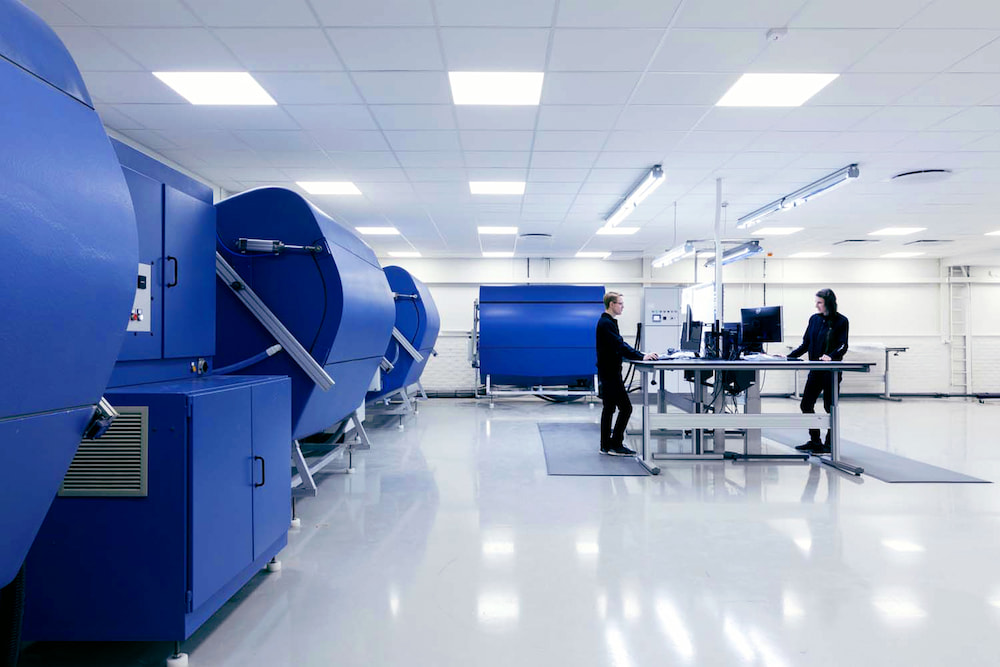
Cotec Labs provides a 1200 sqm laboratory facility. Take a closer look at our laboratory
and equipment.
Quality and certificates
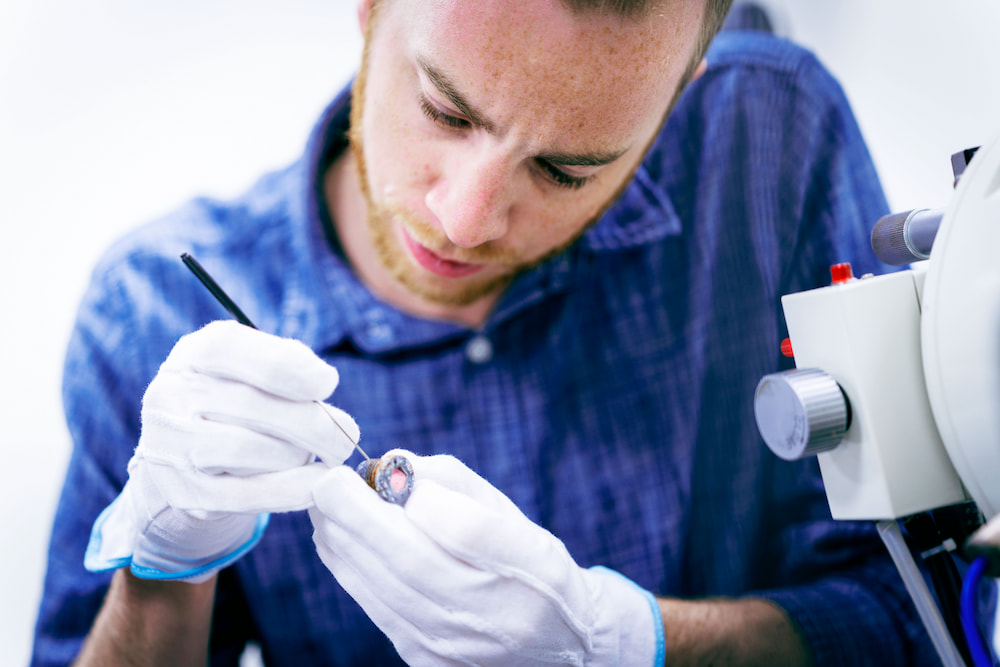
We are accredited by Swedac and part of the international accreditation network ILAC.